Could Your Brain Be Different? ADHD Symptoms in Adult Women Explained

Table of Contents
- 1. Why Does It Look So Different? The Truth About ADHD Symptoms in Adult Women
- 2. Are You Overlooking the Silent Signs? Subtle ADHD Symptoms Adult Women Often Miss
- 3. What Happens When Your Brain's Traffic Cop Stops Working? Executive Dysfunction ADHD Adult Female Struggles
- 4. How Do You Find Out for Sure? The ADHD Diagnosis Process for Adult Women
- 5. Why Are Your Feelings a Wild Rollercoaster? Emotional Dysregulation ADHD Women Face
- 6. What Is the Real Cost of Waiting? Late Diagnosis ADHD Adult Women Impact
- 7. Are You Wearing a Secret Mask? Women ADHD Mask Symptoms Coping Tricks
- 8. What Happens When the Energy Runs Out? ADHD Burnout Adult Women Symptoms
- 9. Why Is Love So Hard to Hold? Undiagnosed ADHD Symptoms Adult Women Relationships Face
- 10. How Do You Survive the Daily Chaos? ADHD Symptoms Working Mothers Deal With
- 11. Is It Just Worry, or Is It Something More? ADHD in Women vs Anxiety Symptoms
- 12. Why Does a Dark Cloud Follow You? ADHD Comorbidity Adult Women Depression Risks
- 13. Why Does Your Brain Change Every Month? Hormonal Changes Affect ADHD Symptoms Women Experience
- 14. Take Your Next Step: Treating ADHD Symptoms in Adult Women with Dr. Michael J. Zizmor, MD
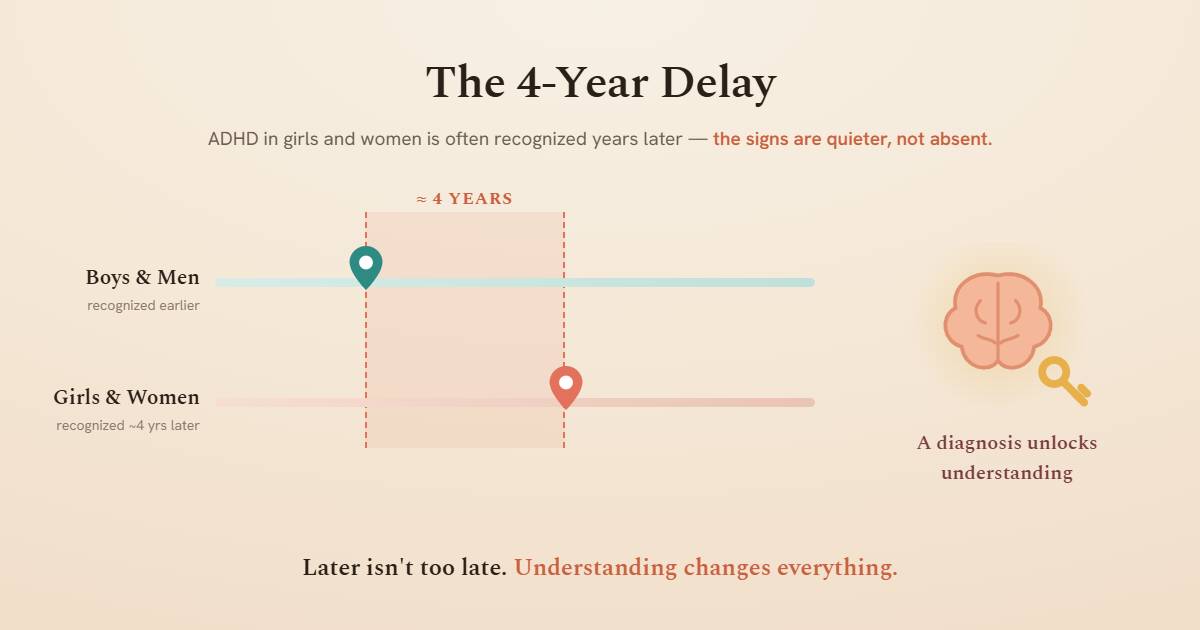
Right now, millions of adults in the United States are living with brains that work differently. Many of them are women who suffer in quiet panic. In fact, a massive medical study of 85,330 patients found that females with this condition wait four whole years longer than males to get diagnosed. This means millions of women spend years feeling confused, broken, and completely alone. They wake up every day with a racing mind. They struggle to keep up with simple chores. They wonder why life feels so much harder for them than for everyone else. If you are reading this, you might be one of those women. You do not have to live this way. Do not let another day go by blaming yourself for struggles you cannot control. Stop what you are doing right now and read this guide. Let us teach you the truth about ADHD symptoms in adult women so you can finally find clarity, peace, and the expert support you deserve today!
Why Does It Look So Different? The Truth About ADHD Symptoms in Adult Women
When you hear about this condition, you might picture a young boy. He is probably running around a classroom. He cannot sit still. He climbs on furniture and shouts. This is the classic hyperactive type of this condition.
But this is not what it looks like for you.
We must look at how adhd presents differently in adult women compared to men. Instead of running around, your hyperactivity stays inside your head. Your mind feels like a TV that keeps changing channels on its own. Your thoughts race. You feel a constant, quiet restlessness. You do not look hyperactive on the outside. People think you are calm and quiet.
In childhood, boys get diagnosed three times more often than girls. This happens because their symptoms are loud and disrupt the class. Girls tend to be daydreamy, quiet, or highly talkative. Because you did not cause trouble in school, teachers did not notice your struggles. You went unnoticed. Now that you are an adult, the demands of life are much higher. The coping tricks you used as a kid no longer work.
Are You Overlooking the Silent Signs? Subtle ADHD Symptoms Adult Women Often Miss
Many women do not realize they have this condition because the signs are very quiet. These subtle adhd symptoms adult women face do not look like a medical issue. They just look like everyday messiness or stress. We must look at how adhd presents differently in adult women compared to men
Let us look at some common signs you might experience:
- The Lost Keys Routine: You spend twenty minutes looking for your phone or keys every single morning. They are often in strange places, like the freezer, the bathroom counter, or under a pile of mail.
- The Drifting Mind: You find yourself zoning out when your partner or boss is talking directly to you. You want to listen, but your mind drifts away. You nod your head, but you did not hear a single word.
- The Chore Block: You avoid tasks that need a lot of mental effort. Paying bills, filing taxes, or filling out forms feels almost impossible to start. So, you put them off until the last minute.
- The Forever Mess: Your desk, your car, or your bedroom is always cluttered and messy. You try to clean, but the mess seems to return within a single day.
- The Late Clock: You struggle to guess how long a task will take, so you are always running late. You underestimate how long it takes to drive to a meeting or get dressed. This causes you to run late for doctor visits and dinner plans.
These struggles are not your fault. They are signs of a brain that processes the world differently.
What Happens When Your Brain's Traffic Cop Stops Working? Executive Dysfunction ADHD Adult Female Struggles
To understand why these signs happen, we need to look at your brain's boss. Doctors call this system executive function. Think of it as the traffic cop of your mind. This cop directs your thoughts, helps you start tasks, and keeps you organized.
When you deal with executive dysfunction adhd adult female challenges, that traffic cop gets too tired to work. The signals get crossed. Your brain does not know which task to handle first. You look at a messy room and feel completely frozen. You want to clean, but your brain cannot find the "start" button. Doctors call this task paralysis.
This breakdown makes simple chores feel like huge projects. Doing the dishes is not just one step. It means sorting, washing, drying, and putting things away. For a brain with this struggle, that feels like climbing a mountain. So, you leave the dishes in the sink. You feel guilty, but you cannot move.
You might start to fold laundry, but then you see a book. You start reading the book. Then you realize you need to water the plants. You walk to the kitchen and see a dirty dish. You start washing the dish. At the end of the day, your house is still messy, and you are completely exhausted.
Our team at Dr. Zizmor's clinic knows how frustrating this is. We teach you how to break these tasks down into tiny, easy steps. We help you build simple systems to support your brain's natural style.
How Do You Find Out for Sure? The ADHD Diagnosis Process for Adult Women
Finding out if you have this condition can change your whole life. It is not about labeling yourself. It is about understanding how your mind works so you can stop blaming yourself.
The adhd diagnosis process for adult women is careful, supportive, and complete. We do not just look at how you behave today. We look at your whole history, stretching back to when you were a little kid.
This process is important because other struggles can look like ADHD. Chronic stress, thyroid issues, or bad sleep can make you lose focus too. We want to make sure we identify the root cause of your struggles so you get the right support.
We also look at how your symptoms impact your work and your relationships. This helps us build a treatment plan that is designed just for you.
Ready for Answers? The ADHD Self Assessment Adult Women Questionnaire
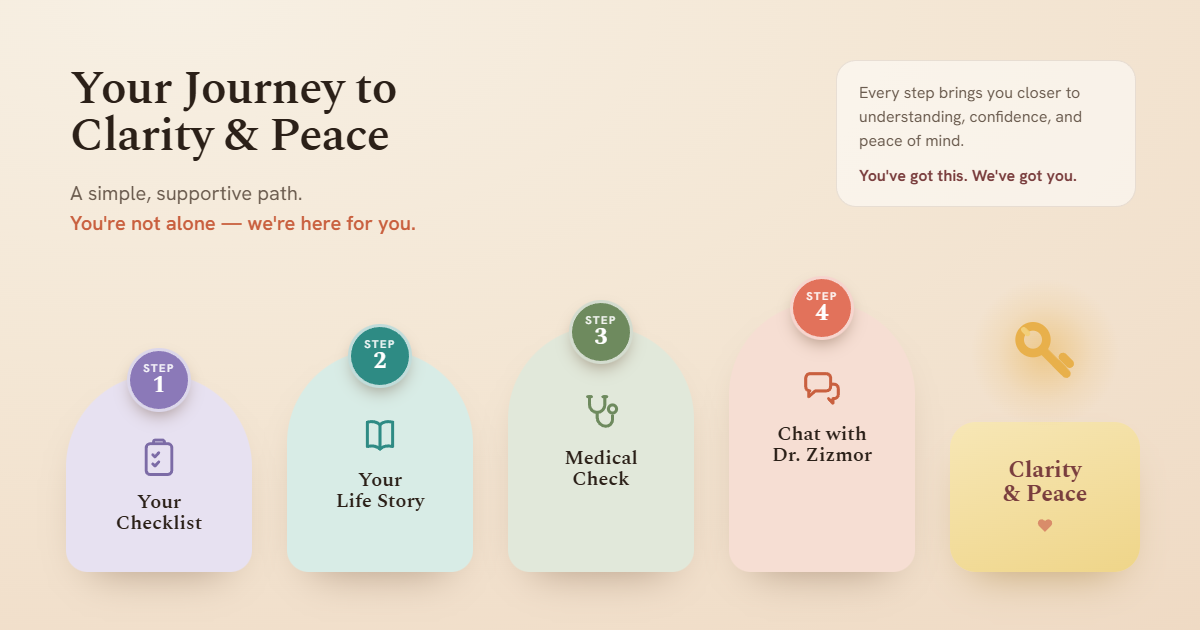
Your journey to clarity often starts with a simple checklist. A doctor will use an adhd self assessment adult women questionnaire to map out your specific struggles.
This questionnaire asks about your focus, your memory, and your daily habits. It helps us see where your brain is struggling and where it is strong. We combine this checklist with a deep look at your life history.
Let us look at how this process works step by step:
If you want to start this process, our team at Dr. Zizmor’s clinic is ready to help you. We will guide you through each step with care and respect.
Why Are Your Feelings a Wild Rollercoaster? Emotional Dysregulation ADHD Women Face
ADHD is not just about losing your keys or forgetting appointments. It is also about how you handle big feelings. Many women struggle with the emotional dysregulation adhd women face as a daily storm.
This emotional challenge means your feelings are more intense. When you feel happy, you are on top of the world. But when you feel sad, angry, or rejected, the pain feels too heavy to bear. You might have quick mood swings, get easily flustered, or find it very hard to calm down after an upset.
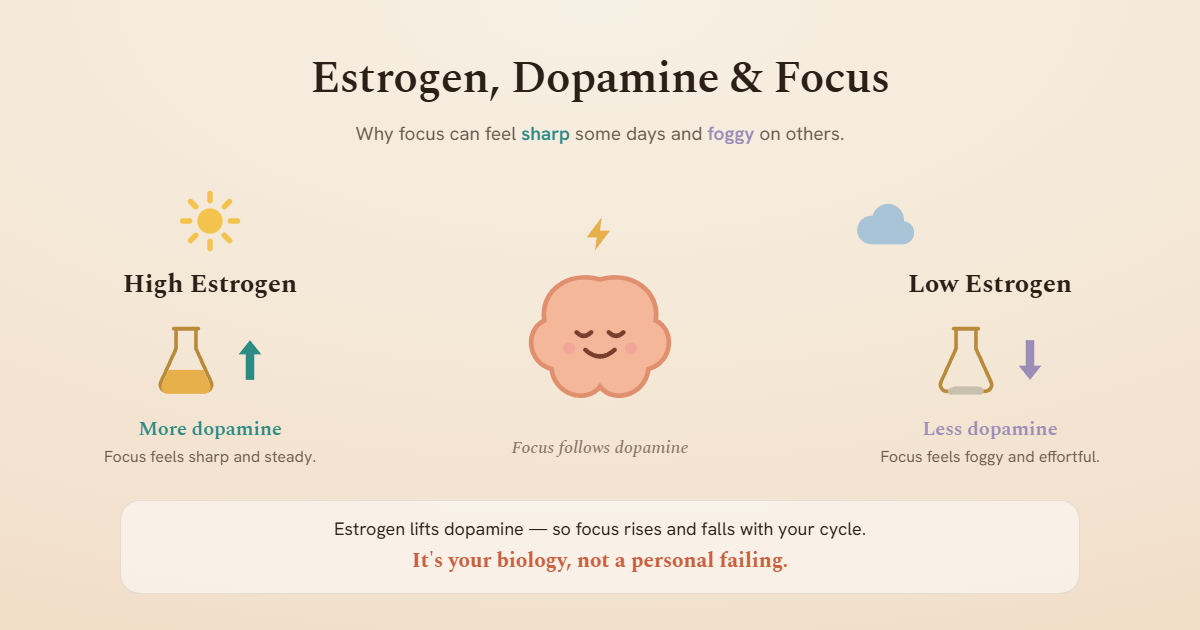
This storm can make you feel like you are walking on eggshells. You might worry about losing control of your anger or crying in front of others. This is not because you are too sensitive. It is because your brain's emotional braking system is not getting enough dopamine to slow down your feelings.
You might also deal with a struggle called rejection sensitive dysphoria. This means that a small piece of constructive feedback feels like a massive attack. If a friend does not reply to your text right away, your brain tells you that they hate you. You feel a deep, physical pain in your chest. This emotional rollercoaster is exhausting, but we can help you build tools to navigate these waves with confidence.
What Is the Real Cost of Waiting? Late Diagnosis ADHD Adult Women Impact
Waiting decades for an answer takes a toll on your self-image. The late diagnosis adhd adult women impact is often felt as a deep sense of grief and regret.
When you do not know why you struggle, you make up reasons to explain your challenges. You might tell yourself that you are lazy, stupid, or broken. Over time, this self-blame turns into low self-esteem, chronic anxiety, and depression.
A landmark study of 85,330 people with ADHD showed that women are diagnosed four years later than men on average. This delay means women spend years trying to fix themselves without knowing the true cause of their pain.
Think about all the times you cried because you forgot an important task. Think about the money you lost because you forgot to cancel a subscription. Think about the friendships that faded because you forgot to text back. All of these experiences leave scars.
Finding out you have ADHD in adulthood can bring a massive wave of relief. It helps you look back at your past with kindness and understanding. You realize you were not failing. You were just playing a very difficult game with a different set of rules.
Are You Wearing a Secret Mask? Women ADHD Mask Symptoms Coping Tricks
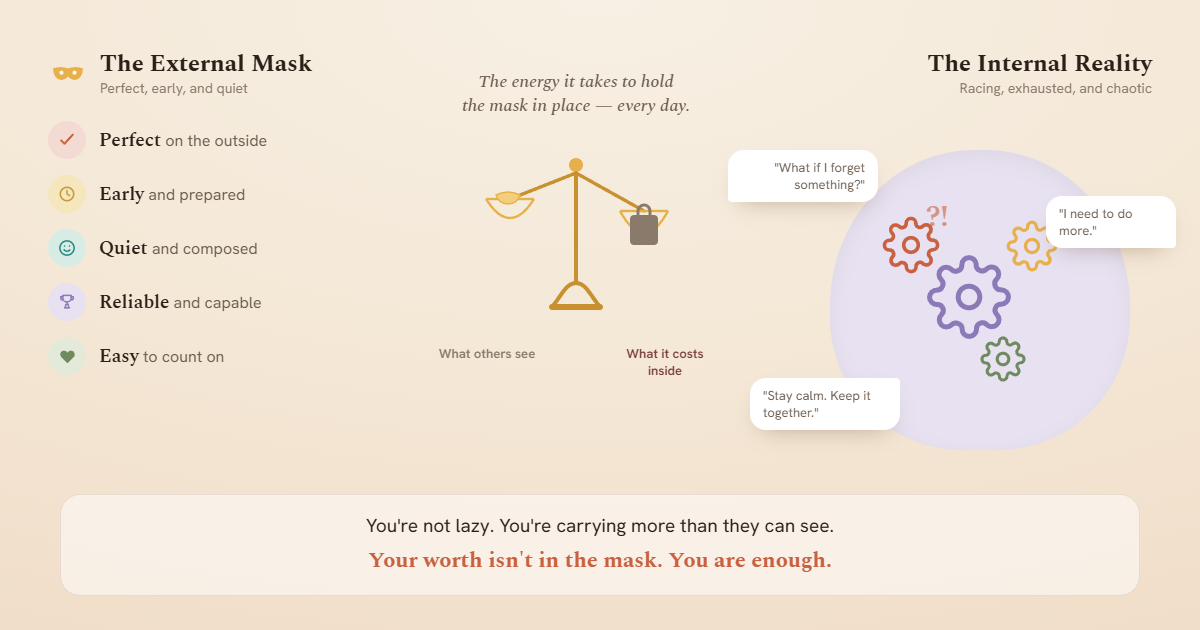
To survive in a world that expects them to be perfect, many women build a secret shield. They use women adhd mask symptoms coping strategies to hide their daily struggles.
Masking is like running a marathon in secret while trying to look completely relaxed. You smile, nod, and say you are doing great, but inside, you are exhausted. You use strict rules to keep your life from falling apart, but the effort takes a massive toll on your energy.
Let us look at how masking looks in daily life:
- The Early Arrival: You show up an hour early to every meeting because you are terrified of running late. You spend all your energy planning the drive and setting five alarms.
- The Silent Listener: You stay quiet in conversations because you fear you might say the wrong thing or interrupt someone. You rehearse what you want to say in your head before speaking.
- The Hidden Mess: You buy expensive storage bins and throw everything into them before guests arrive. Your home looks clean, but the drawers are filled with chaotic clutter.
The world sees a perfect, organized woman. But inside, you feel like you are skating on thin ice. The constant fear of being found out is terrifying.
What Happens When the Energy Runs Out? ADHD Burnout Adult Women Symptoms
Eventually, the energy required to maintain the mask runs out. This leads to severe exhaustion. The adhd burnout adult women symptoms can make you feel like your system has shut down completely.
During a burnout cycle, tasks that used to be manageable feel impossible. You might feel completely drained, struggle to think clearly, or withdraw from friends and family. This burnout is a direct result of pushing your brain past its natural limits for too long.
Let us look at the main signs of this burnout:
- Extreme Brain Fog: You look at your computer screen, and the words do not make sense. You cannot find the right words when talking to your friends.
- Physical Exhaustion: No matter how much you sleep, you wake up feeling like you ran a marathon. Your body feels heavy and slow.
- Emotional Shutdown: You feel numb and disconnected. You cannot bring yourself to care about your work, your hobbies, or your daily goals.
- Increased Clutter: Your organization systems completely fall apart. The dishes pile up in the sink. The laundry stays in a basket for weeks. You feel too tired to care.
We help you break this cycle of exhaustion. We teach you how to drop the mask, build self-compassion, and get the proper medical support you need.
Why Is Love So Hard to Hold? Undiagnosed ADHD Symptoms Adult Women Relationships Face
ADHD does not stop when you leave work. It follows you home and impacts how you connect with the people you love. The undiagnosed adhd symptoms adult women relationships face can cause a lot of silent friction.
Your partner might feel ignored when you zone out during a conversation. They might think you do not care when you forget anniversaries, birthdays, or family events. On the other side, you feel criticized and misunderstood when they point out your mistakes.
Let us look at how these struggles impact love:
When these struggles are not diagnosed, they can lead to constant fights and divorce. You feel like a bad partner, and they feel like a parent who has to clean up after a child.
Once you and your partner see that the struggle is neurological, you can stop fighting each other. You can start working as a team. We help couples build communication tools that support both partners.
How Do You Survive the Daily Chaos? ADHD Symptoms Working Mothers Deal With
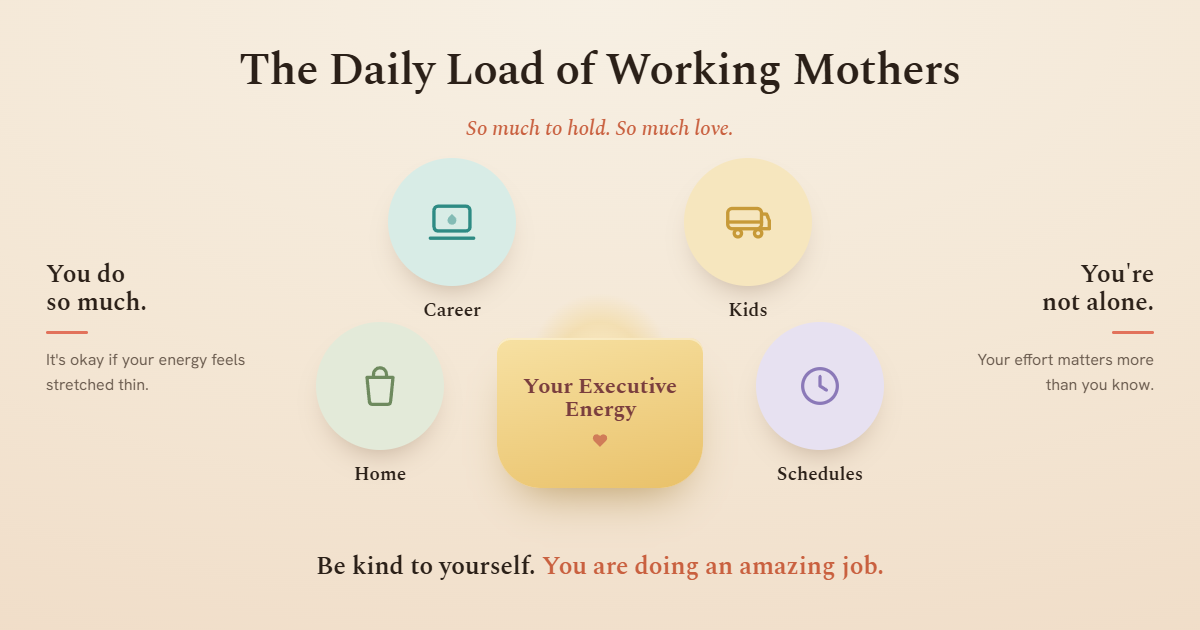
If being an adult with ADHD is hard, being a mother with ADHD is a double challenge. The adhd symptoms working mothers face can feel like juggling spinning plates while walking a tightrope.
You have to manage your own career and keep track of school schedules, doctors' appointments, and meal plans. This massive demand on your executive function can cause frequent meltdowns.
Imagine waking up and realizing you forgot to pack your kid's lunch. You rush to make a sandwich, but you realize the bread is moldy. You run to the car, but you cannot find your keys. You finally get to school, but you realize it is a teacher workday and there is no school today.
These moments are incredibly painful. You feel like a failure as a mother and as a worker. You worry that you are letting everyone down.
You do not have to carry this weight alone. Our therapy and coaching programs are designed to help working mothers build simple, stress-free routines that work for the whole family. We teach you how to set boundaries, ask for help, and use simple tools to stay organized.
Is It Just Worry, or Is It Something More? ADHD in Women vs Anxiety Symptoms
Many women who come to our clinic have been treated for general anxiety for years without success. Understanding the difference in adhd in women vs anxiety symptoms is key to getting the right care.
While anxiety is driven by constant worry and physical fear, ADHD-induced anxiety is a reaction to executive strain. You feel anxious because you are afraid you will forget an appointment, lose an important document, or make a careless mistake at work.
Let us compare the two experiences:
Many girls are prescribed antidepressants for anxiety or depression before anyone realizes they have ADHD. This happens because anxiety is often a coping mechanism. You make yourself so scared of failing that you force your brain to focus. But using fear to focus is exhausting.
When we treat the underlying ADHD, the chronic anxiety often fades away because your brain finally has the support it needs to stay organized.
Why Does a Dark Cloud Follow You? ADHD Comorbidity Adult Women Depression Risks
It is very common for ADHD to travel with other mental health challenges. This co-occurrence, known as adhd comorbidity adult women depression experience, affects many women with the condition. In fact, a survey from ADDitude magazine found that 93% of women with ADHD have at least one related diagnosis, like depression or anxiety.
Living with untreated ADHD means facing small failures every single day. You might lose your keys, miss a deadline, or let down a friend. Over time, these negative experiences build a sense of helplessness.
You start to believe that you cannot control your life. You think that no matter how hard you try, you will always fail. This is what researchers call learned helplessness. It is a major driver of chronic depression.
When you get depressed, you lose your motivation. You feel tired and sad. This makes your ADHD symptoms even worse, creating a painful, downward spiral.
At our clinic, we treat both challenges together. We help you clear away the dark cloud of depression while building the executive tools you need to feel in control of your life again.
Why Does Your Brain Change Every Month? Hormonal Changes Affect ADHD Symptoms Women Experience
Many women notice that their focus, mood, and memory change throughout the month. This is because hormonal changes affect adhd symptoms women experience in a direct, biological way.
The brain's focus system is highly sensitive to estrogen. Estrogen helps release dopamine, the neurotransmitter that helps keep your brain organized, motivated, and calm.
When your estrogen levels are high, your brain works smoothly. But when estrogen drops, your dopamine levels drop too. This causes your ADHD symptoms to become much more severe.
Let us look at how this changes throughout your life:
- The Monthly Cycle: During the week before your period, your estrogen levels plummet. You might find it much harder to focus, feel more irritable, and experience severe mood swings. This is often mistaken for premenstrual syndrome (PMS), but it is actually your brain running low on dopamine.
- The Mid-Life Transition: As women enter perimenopause, estrogen fluctuates wildly. This change can trigger a major return of ADHD symptoms, even in women who managed well their whole lives. Many women seek treatment for the first time during this transition because their usual coping tricks stop working.
- The Post-Birth Drop: After giving birth, estrogen drops suddenly. This can bring a wave of severe brain fog and executive strain that makes caring for a newborn incredibly difficult.
At our clinic, we track these cycles to help you adjust your support plan. We make sure you have the right tools and strategies when your hormones drop.
Take Your Next Step: Treating ADHD Symptoms in Adult Women with Dr. Michael J. Zizmor, MD
You do not have to go through this alone. If you are ready to find answers and take control of your life, we are here to support you.
Dr. Michael J. Zizmor is a highly caring and experienced psychiatrist. He received his undergraduate degree in Psychology from the University of California, Berkeley. He earned his medical doctorate from the University of Kansas School of Medicine.
He completed his clinical internship at Boston University-affiliated hospitals. He pursued additional psychiatric residency training at St. Elizabeths Hospital in Washington, DC. With over forty years of clinical experience, Dr. Zizmor brings deep understanding, clinical skill, and a warm, down-to-earth approach to every patient.
Our clinic is based in Berkley, California, and we provide convenient telehealth visits for patients across the region. We will listen to your story, answer your questions, and design a personalized plan to help your brain thrive.
Stop wondering why life feels so hard. Contact us today at blog.zizmormd.com/ or visit our main site at zizmormd.com/ to schedule your first telehealth appointment! Let us work together to help you build a peaceful, organized, and happy life.
FAQs
Does adult ADHD ever run in families?
Yes. Your genes play a huge role in how your brain develops. If your parents or siblings have it, you are much more likely to struggle too. Stop guessing and call us to trace your family tree today.
Do ADHD medications work right away?
Yes. Stimulant medications can spark your brain's chemistry in under an hour. They quickly help your internal traffic cop organize your messy thoughts. Contact our clinic right now to discover if this fast support can help you today.
Can adult ADHD ever be cured?
No. You cannot wash away the unique way your brain is wired. However, you can master your symptoms with the right tools. Reach out to our clinic today to learn how to turn your chaos into calm now.
Can you develop ADHD in adulthood?
No. Your struggles must start before age twelve to be ADHD. Adulthood just makes the demands much heavier, exposing the hidden blocks. Call us right now to look back and uncover the root cause of your lifelong pain.
Does untreated ADHD affect physical health?
Yes. It can trigger bad sleep, poor eating habits, and constant bodily stress. You deserve a healthy, vibrant life instead of living in constant exhaustion. Contact us today to heal your mind and reclaim your physical strength now.