10 Proven Parenting Strategies to Handle for Children ADHD Outbursts
Table of Contents
- 1. The Exhausting Reality of the ADHD Emotional Firestorm
- 2. How to Calm an ADHD Child During a Meltdown?
- 3. How Can Creating a Calming Routine Change Your Life?
- 4. How Do We Use ADHD Parenting Strategies to Tackle Defiance?
- 5. What Are the Right Consequences for Destructive Outbursts?
- 6. Managing Extreme Emotional Outbursts in ADHD Toddlers
- 7. Parenting Tips for ADHD Aggression in School-Age Kids
- 8. Behavioral Therapy Techniques for ADHD Tantrums at Home
- 9. Strategies for Reducing ADHD Child's Emotional Dysregulation
- 10. ADHD Outburst Triggers and Prevention Strategies for Kids
- 11. Support for Parents Dealing with ADHD Outburst Burnout
- 12. Communication Strategies for De-Escalating ADHD Tantrums
- 13. Best Parenting Books for ADHD Anger Management in Kids
- 14. When to Seek Professional Help for ADHD Violent Outbursts
- 15. Moving Forward with Hope and Peace
Did you know that right now, nearly 7 million children in the United States live with ADHD? That is a massive number. Every day, thousands of parents watch their kids go from completely happy to wildly explosive in a second. You might be at the grocery store, or at a park, or just sitting at your kitchen table when the storm hits. Your child starts screaming, throwing things, or crying so hard they cannot speak. You feel the hot stares of strangers judging your parenting. You feel like a total failure. You feel exhausted and alone.
But you are not alone. New research from the American Psychological Association shows that parents of kids with differences face extreme stress. According to study data, up to 5 million U.S. parents experience severe parent burnout every single year. If you do not change how you react, you might find yourself stuck in a loop of constant yelling and deep guilt. We want to help you break that loop.
To do that, we need to find the best parenting strategies for children with ADHD outbursts so your home can feel peaceful again. Your child is not trying to be bad. Their brain is just struggling to handle big feelings.
Our practice is led by Dr. Michael J. Zizmor. He has over 40 years of mental health experience. He started his journey at the University of California, Berkeley, where he studied psychology. Then he earned his medical doctorate at the University of Kansas School of Medicine. After that, he worked in hospitals linked with Boston University and finished his psychiatric residency at St. Elizabeths Hospital in Washington, DC. We have seen thousands of families turn chaos into calm. We know what works. Let us look at how we can help your family heal.
How to calm an ADHD child during a meltdown?
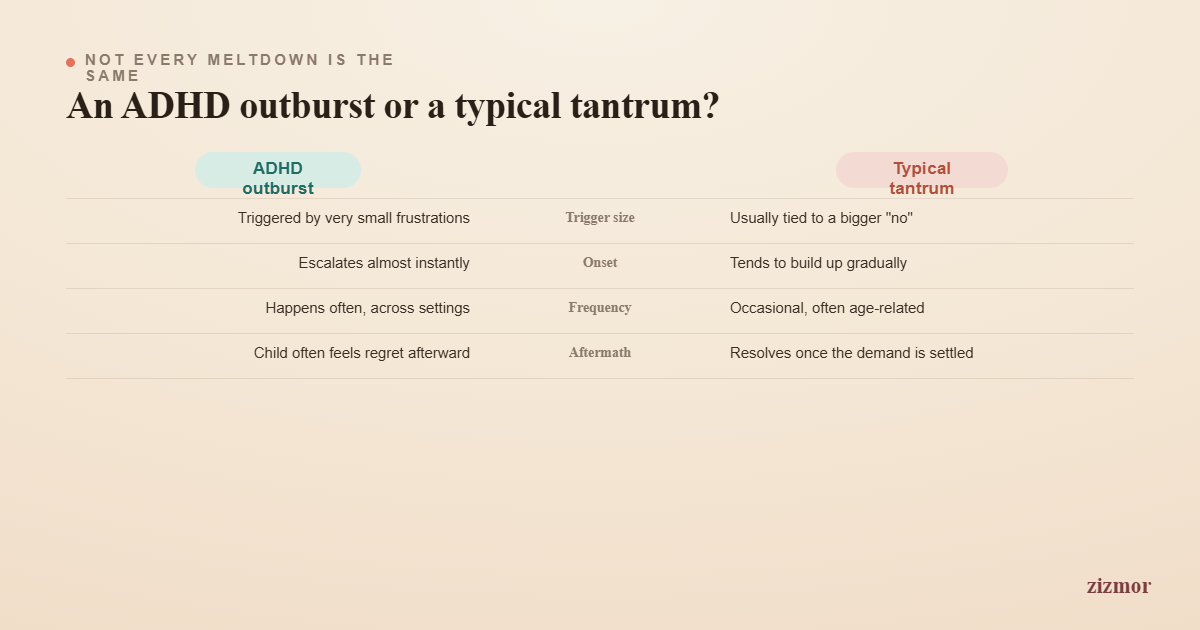
First, we must understand what a meltdown really is. A meltdown is not a normal tantrum. A normal tantrum has a clear goal. A child throws a tantrum because they want a toy or want to stay up late. If you give them the toy, the tantrum stops.
A meltdown is different. It is a complete nervous system overload. The brain is in fight-or-flight mode. The brain is in fight-or-flight mode. They cannot hear your logic. They cannot stop themselves, even if you offer them their favorite treat.
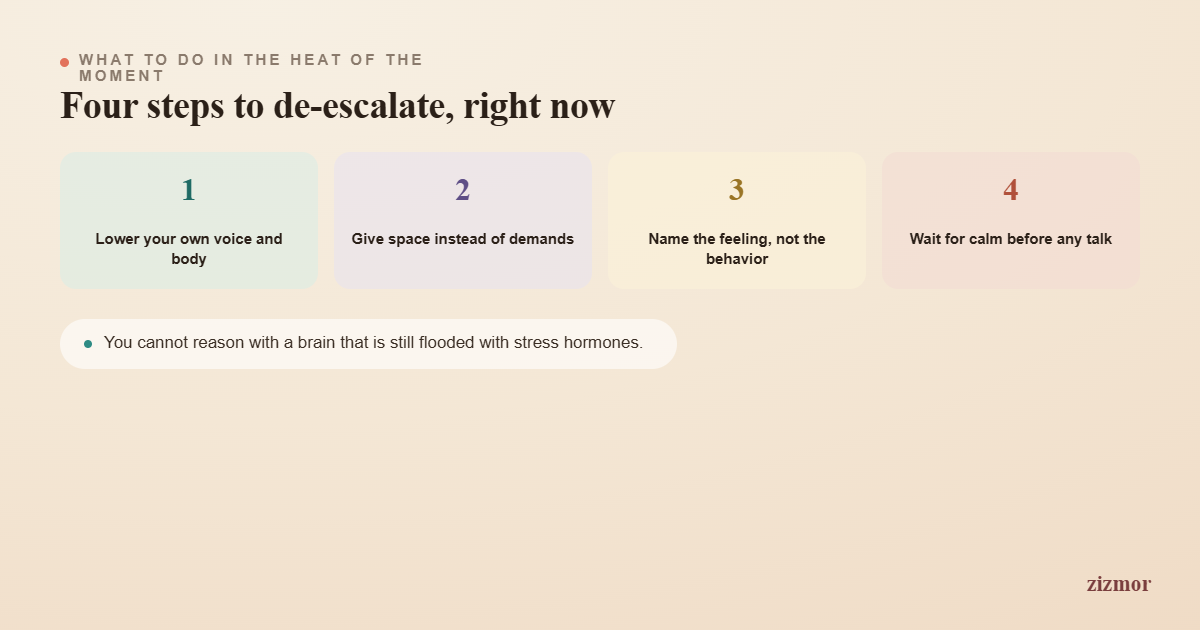
If you want to know how to calm an adhd child during a meltdown, stop talking. Do not try to teach a lesson right now. Words are just more noise to their overloaded brain.
Next, step back. Give them at least two arms' lengths of physical space. If you stand over them, their brain feels attacked.
Then, watch your own body. Sit down on the floor so you are not looking down at them. Take deep, slow breaths. They will slowly match your calm energy.
Use this script in a very quiet whisper: "I see you are completely overwhelmed right now. I am sitting right here with you until you feel safe again."
How can creating a calming routine for ADHD kids prone to meltdowns change your life?
An ADHD brain loves knowing what comes next. Transitions are very hard. If a child does not know what is coming, they feel anxious. Anxiety leads to blowouts.
You need a daily routine that stays the same. This routine acts like a safety rail. It helps with creating a calming routine for adhd kids prone to meltdowns.
Start with the bed routine. Lack of sleep makes ADHD symptoms much worse. It makes kids more irritable.
Turn off all screens 60 minutes before bed. Blue light keeps the brain awake.
Instead of screens, do quiet things. Draw pictures, color, or read a book together.
Spend 10 minutes cuddling before sleep. Cuddling releases happy chemicals in the brain. It makes your child feel incredibly safe and loved.
Use visual checklists. Do not just yell out instructions. Draw pictures of their morning tasks. Let them check off the pictures. This keeps them focused and happy.
How do we use parenting strategies for children with ADHD outbursts to tackle defiance?
Standard discipline does not work for ADHD kids. Spankings, yelling, or taking away toys for a month will fail. These things make your child feel rejected and more angry.
Up to 40% of kids with ADHD also have Oppositional Defiant Disorder. They will fight you on everything. They say "no" before you even finish talking.
Let us look at how to build effective discipline for adhd children with defiance. We must use specific parenting strategies for children with ADHD outbursts to help them cooperate.
Use "when-then" statements. They are simple and do not feel like a fight.
Say: "When your shoes are on, then you can watch your video." Keep your voice completely flat and calm. Do not argue. If they yell, just repeat the same phrase.
Keep consequences very short and immediate. Do not say, "You cannot go to the park this weekend." That is too far away for an ADHD brain to care. Say: "You threw your toy, so the toy goes on the shelf for 10 minutes."
What are the right consequences for ADHD children's destructive outbursts?
When your child gets angry, they might break things. They might smash a toy, kick a wall, or rip up a book. This behavior is scary and unacceptable.
But you must never give consequences in the heat of the moment. If you try to punish them while they are screaming, they will explode even more. Their brain thinks they are fighting for survival.
We must use logical consequences for children's destructive outbursts. Wait until they are 100% calm. This might take 20 minutes or an hour.
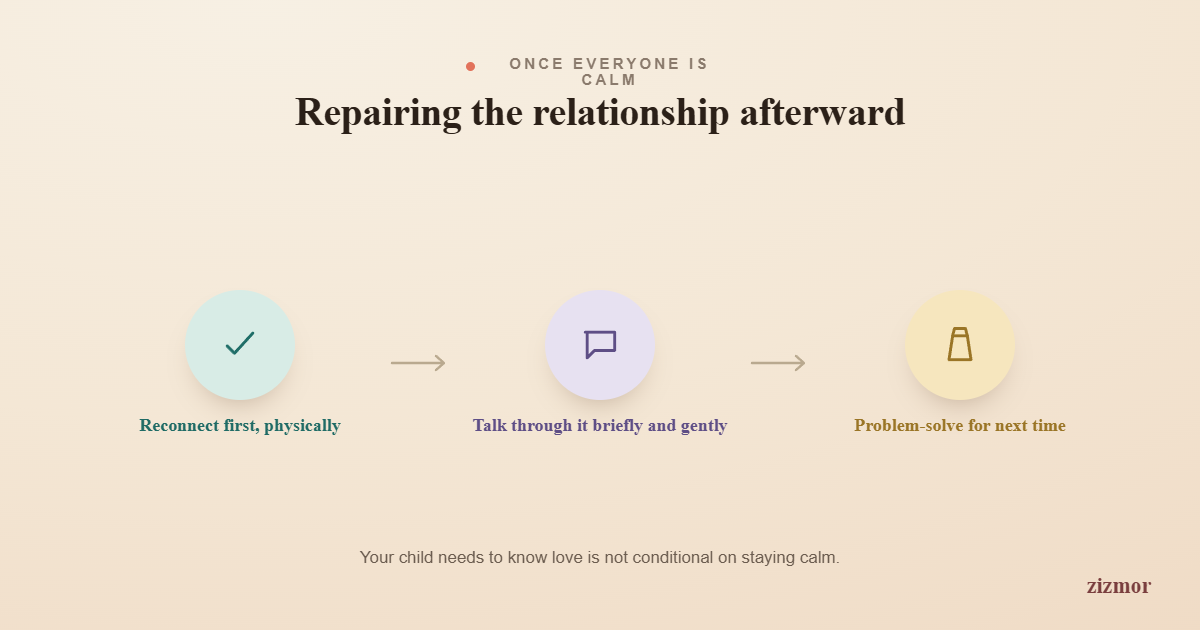
Once their body is calm, start the clean-up process. They must help repair the damage.
If they throw toys across the room, they must pick them up. If they broke a sister's toy, they must use their own pocket money or draw a card to say sorry.
Say this: "I love you. It is okay to feel angry. But breaking things is not safe. Now that we are calm, we need to fix this together." This teaches them that they are responsible for their actions.
Managing extreme emotional outbursts in ADHD toddlers
ADHD is real even in very young children. Toddlers with ADHD do not just have normal tantrums. Their meltdowns last longer, come out of nowhere, and seem impossible to stop.
They feel emotions much deeper than other toddlers. They scream louder when you take away a toy. They give up on puzzles quickly and throw the pieces.
How can we start managing extreme emotional outbursts in adhd toddlers?
Use a firm, gentle hold. If your toddler is thrashing or trying to hurt themselves, wrap your arms around them in a tight hug. This deep pressure calms their nervous system.
Change the environment. Carry them outside into the fresh air. Turn on a water faucet and let them touch the cool water. This physically interrupts their brain's panic loop.
Keep your words very short. Say: "You are safe. I am holding you. We are safe."
Parenting tips for ADHD aggression in school-age kids
School takes a lot of mental energy. Kids with ADHD have to sit still, listen, and behave for six hours. They work incredibly hard to keep their symptoms under control.
When they get home, their energy is gone. Their focus medication has often worn off. This is why they collapse or get aggressive as soon as they walk through the door.
These parenting tips for adhd aggression in school-age kids will help you keep the peace. We need to change our after-school plan.
First, give them a high-protein snack immediately. Low blood sugar makes aggression worse.
Second, do not ask them about school right away. Do not ask about their homework. Give them a 30-minute buffer zone.
Third, let them move. Let them jump on a trampoline, ride a bike, or run in the yard. Physical activity releases built-up stress.
Transitions should be soft. Give them a 5-minute warning before it is time to sit down for dinner.
Behavioral therapy techniques for ADHD tantrums at home
The ADHD brain thrives on positive feedback. Sadly, kids with ADHD hear negative feedback all day. They get told "no," "stop," and "be quiet" constantly. This makes them feel defeated and angry.
We can use behavioral therapy techniques for adhd tantrums at home to change this.
Focus on positive reinforcement. Catch your child doing something right. If they put their shoes away without screaming, notice it.
Say: "I love how you put your shoes away the first time I asked. That was so helpful!"
Set up a simple token board. They can earn points or stickers for keeping a safe body or using soft words. Let them trade these points for fun family activities, like a movie night or extra park time.
Also, use out-loud thinking. Let them hear you process frustration.
Say: "This drawer is stuck. I feel a bit angry. I am going to take a deep breath before I try to pull it again." This shows them how to handle frustration.
Strategies for reducing ADHD child's emotional dysregulation
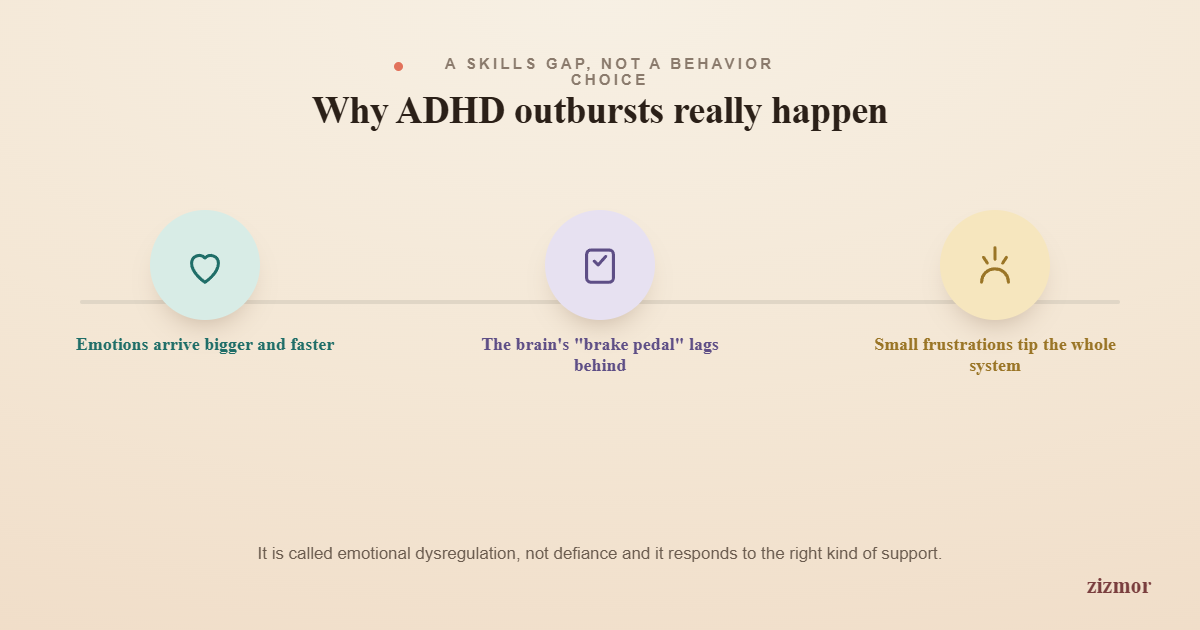
Emotional dysregulation is a core part of ADHD. It means your child's feelings are turned up to a level 10 when they should be at a level 2. A broken pencil feels like the end of the world.
We must use active strategies for reducing adhd child's emotional dysregulation. We must teach them how to lower their body's stress response.
Try a vagal nerve reset. This is a simple physical trick that signals the brain to calm down.
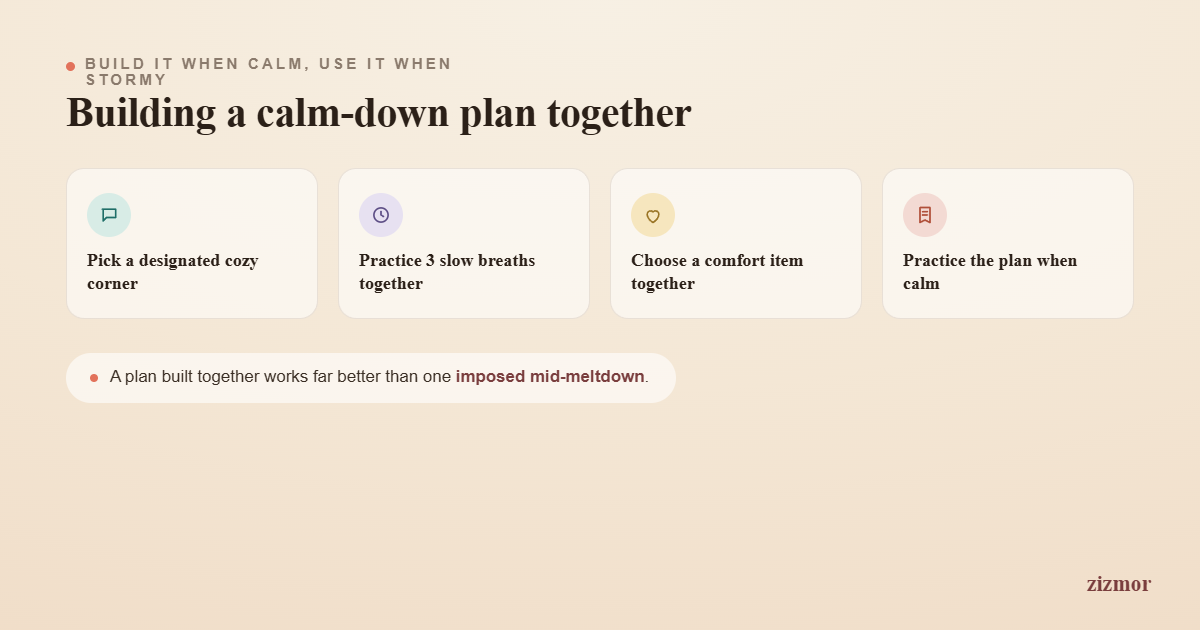
Practice superhero breathing when they are already calm. Have them put their hands on their hips, take a huge breath in, and blow out slowly like they are blowing out a giant candle.
Play the remote-control game. Have them pretend they have a remote control that can turn down the volume of their big feelings.
You can also build a cool-down corner. This is not a time-out spot. It is a cozy corner with pillows, books, and soft toys. Tell them: "Your feelings are very big right now. Why don't you sit in your cozy corner for a few minutes to help your body feel safe again?"
ADHD outburst triggers and prevention strategies for kids
Outbursts do not actually come out of nowhere. They usually have a clear trigger. If you learn to spot these triggers, you can stop the storm before it starts.
These are the main adhd outburst triggers and prevention strategies for kids. Common triggers include transitions, being tired, hunger, or sensory overload.
Transitions are a massive trigger. Moving from playing a video game to doing homework is very painful for an ADHD brain.
To prevent this, use visual timers. A sand timer or a big clock lets them see how much time is left.
Say: "When the red section on this timer is gone, it will be time for dinner." This gives their brain time to prepare.
Another trigger is medication wear-off. If your child has a blowout every day at 4:00 PM, look at their medication schedule. Speak with their doctor about adjusting the timing.
Keep healthy, quick snacks ready for the afternoon to prevent hunger-related blowouts.
Support for parents dealing with ADHD outburst burnout
Caring for a child with ADHD is exhausting. The parents of these kids are four times more likely to experience severe burnout. You are on duty 24 hours a day with very few breaks.
It is completely normal to feel angry, tired, and guilty. You might find yourself snapping at your kids or wanting to run away.
We must find support for parents dealing with adhd outburst burnout. You must protect your own mental state.
Use the "parent time-out". If you feel yourself getting ready to scream, step into a bathroom or closet. Take five deep breaths before you go back. Your safety and your child's safety are key.
Make an agreement with your partner. Agree on rules before the meltdowns start. If one parent gets too stressed, the other parent should step in immediately.
Build your support network. Find local support groups or online parent circles. Talking to parents who truly understand your life can heal your shame.
Communication strategies for de-escalating ADHD tantrums
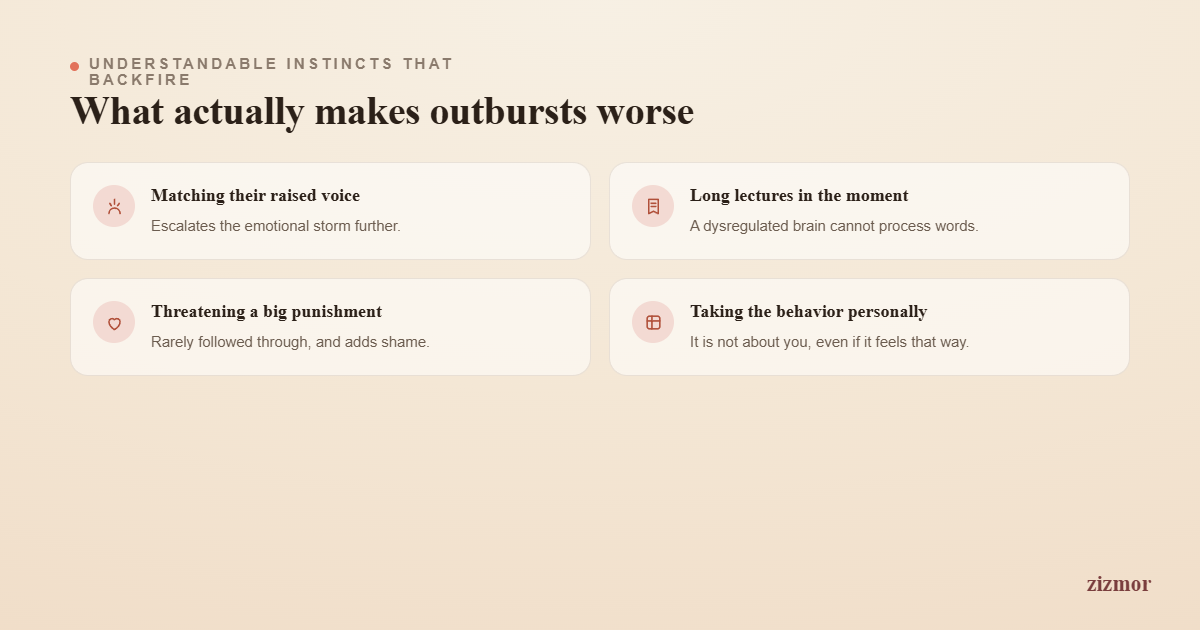
How you talk to your child during a blowout changes everything. If you meet their yelling with your own yelling, the fire gets bigger.
Your calm voice is your best tool. Let us look at a simple guide to help us change our language.
These communication strategies for de-escalating adhd tantrums will keep everyone safe.
Best parenting books for ADHD anger management in kids
You do not have to figure this out alone. There are incredible resources written by top experts to help you guide your child.
Here is a list of the best parenting books for adhd anger management in kids. We recommend these to every family in our practice:
- The Explosive Child by Dr. Ross Greene. This is a must-read. Dr. Greene explains that kids do well if they can. He shows that explosive behavior is caused by a lack of skills, not a bad attitude. He teaches you how to solve problems with your child rather than fight them.
- Taking Charge of ADHD by Dr. Russell Barkley. This is an incredibly practical book with an 8-step parenting plan. It shows you how to use positive attention and clear rules to help your child thrive.
- Smart but Scattered by Peg Dawson and Richard Guare. This book focuses on executive function skills. It helps you understand how to build emotional control, focus, and organization in your child.
When to seek professional help for ADHD violent outbursts
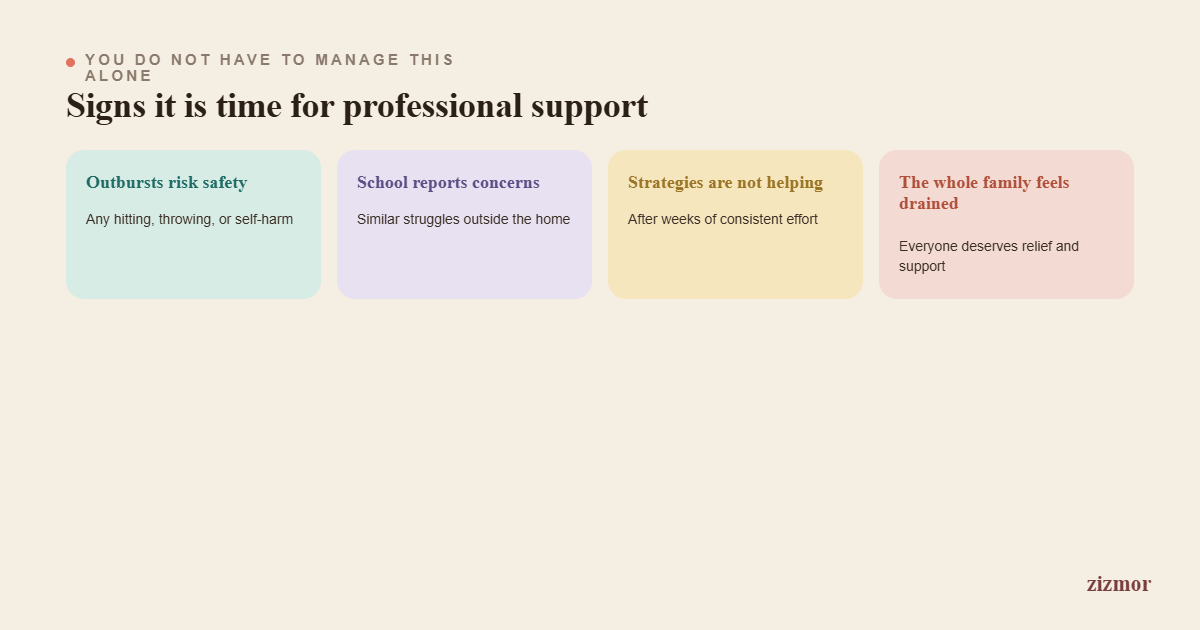
Sometimes, even the best home strategies are not enough. You need to know when to seek professional help for adhd violent outbursts.
Look for these warning signs:
First, your child's behavior is physically dangerous. If they try to hurt themselves, hit siblings, or hurt you, you need help.
Second, the outbursts are causing major trouble at school. If your child is getting suspended or facing social isolation, do not wait.
Third, you suspect other conditions like anxiety, mood disorders, or severe Oppositional Defiant Disorder.
Dr. Michael J. Zizmor is here to help you navigate these hard times. With over 40 years of experience, we can evaluate your child and create a custom plan that fits your family's unique needs. We can help you understand your child's brain and give you the support you need to stop feeling burnt out.
Moving forward with hope and peace
We want you to remember that progress takes time. Your child will still have hard days. That is completely okay and normal.
Do not try to use all ten of these parenting strategies for children with ADHD outbursts tonight. That will overwhelm both you and your child.
Instead, pick just one strategy to try. Maybe start by changing your after-school plan or spending 10 minutes cuddling before bed.
If you need professional support, reach out to our office to schedule a consultation with Dr. Michael J. Zizmor. We can walk this path together. You do not have to struggle in silence. Let us help your child thrive.
FAQs
Can diet changes stop ADHD outbursts?
No, but they help. Sugary foods and artificial dyes trigger sudden spikes in hyperactivity. Stop feeding them junk now. Fill their plates with whole foods to keep their brains steady. Call us to build a healthy eating plan today.
Do weighted blankets stop ADHD meltdowns?
Yes, they can. Weighted blankets apply deep pressure that acts like a warm hug. This pressure tells their panicked body to rest. Buy a weighted blanket tonight. Lay it over them to instantly quiet their racing nervous system.
Does standard time-out stop ADHD tantrums?
No, it fails. Forcing an overloaded ADHD child into quiet rooms makes them feel rejected and terrified. Stop isolating your struggling child. Instead, walk them to a cozy sensory space to help their brain cool down safely.
Does screen time cause ADHD meltdowns?
Yes, it does. Video games and tablets flood their brain with dopamine, making transitions incredibly painful. Pull your child away from screens now. Limit daily media to save them from intense, hyperactive mood swings every single afternoon.
Did you cause your child's outbursts?
No, you did not. ADHD outbursts are genetic and biological brain storms, not bad parenting. Stop blaming yourself for this struggle. Call Dr. Zizmor right now to get the expert medical help your family deserves.