Understanding Anxiety: When Worry Becomes More and How to Find Relief

Anxiety is a natural part of being human. It’s our body’s way of reacting to stress or perceived danger. However, when those feelings become persistent and start to interfere with your ability to enjoy life, it may be a sign of an anxiety disorder.
Anxiety disorders are the most common mental health conditions in the U.S., affecting over one-third of adults at some point in their lives. The good news? They are also highly treatable.
Recognizing the Signs
Anxiety doesn't just happen in your head; it often shows up in your body. Symptoms are usually considered a disorder when they persist for six months or longer.
Emotional and Mental Symptoms:
- Persistent, excessive worry about everyday things (finances, health, or family).
- Difficulty controlling the "worry loop" in your mind.
- Feeling constantly on edge, irritable, or restless.
- Fear of social situations or being judged by others.
Physical Symptoms:
- Unexplained fatigue or muscle tension.
- Heart palpitations or a racing pulse.
- Sleep disruptions (difficulty falling or staying asleep).
- Digestive issues or "nervous stomach."
Common Types of Anxiety Disorders
Generalized Anxiety Disorder (GAD): Chronic, high-level anxiety about many different areas of life. occurring more days than not for at least six months, accompanied by physical symptoms like restlessness, fatigue, difficulty concentrating, irritability, muscle tension, or sleep disturbance.
Panic Disorder: Recurrent, sudden, intense "panic attacks" followed by at least one month of persistent worry about having more attacks or changes in behavior to avoid them.
Social Anxiety Disorder: An intense fear of being watched or evaluated by others in social or performance settings, leading to avoidance of these situations or enduring them with intense distress.
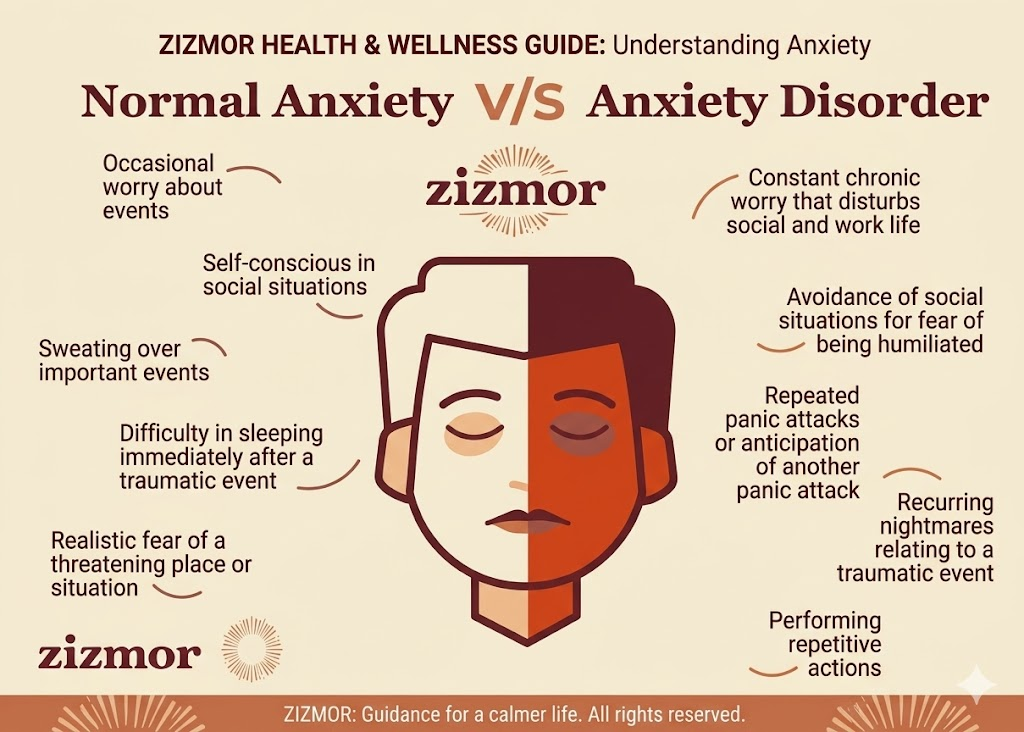
The Tipping Point: Normal Worry vs. Anxiety Disorder
How do you know if you should seek professional help? Look for these three key indicators:
- Duration: Does the anxiety last for months, or is it tied to a specific temporary event (like a big presentation)?
- Intensity: Is the worry out of proportion to the actual situation?
- Control: Can you "turn it off," or does it interrupt your work, relationships, and daily tasks?
- Impact on Life: The anxiety causes significant distress and impairs your ability to function in important areas of life, such as work, school, relationships, or daily activities.
- Physical Symptoms: Anxiety disorders are more likely to be accompanied by persistent physical symptoms like muscle tension, fatigue, and sleep problems.
Taking the First Step Toward Relief
If you feel like your anxiety is in the driver’s seat, reaching out to a healthcare provider is a sign of strength. This might look like:
- Your anxiety persists for weeks or months and doesn't improve on its own
- Your anxiety causes significant distress or interferes with your work, relationships, or daily activities
- You're avoiding important activities, places, or people because of anxiety
- You experience panic attacks
- You have physical symptoms that concern you (such as chest pain or shortness of breath)
- You're using alcohol, drugs, or other unhealthy behaviors to cope with anxiety
- You have thoughts of harming yourself
What to expect during a visit
Many providers use a simple, five-minute tool called the GAD-7 to screen for symptoms. From there, they may recommend:
- Cognitive Behavioral Therapy (CBT): A proven "gold standard" therapy that helps you rewire unhelpful thought patterns.
- Medication: Options such as SSRIs or SNRIs can help balance brain chemistry, making symptoms more manageable.
- Lifestyle Support: Stress-reduction techniques, better sleep hygiene, and regular movement.
Important: If your anxiety leads to thoughts of self-harm, please call or text 988 to reach the Suicide & Crisis Lifeline immediately. Remember, seeking help is a sign of strength, not weakness. With proper treatment, most people with anxiety disorders can lead full, productive lives