12 Foods to Avoid with ADHD for better focus (And What to Eat Instead)
Table of Contents
- What Are the Primary Foods to Avoid with ADHD for Better Focus?
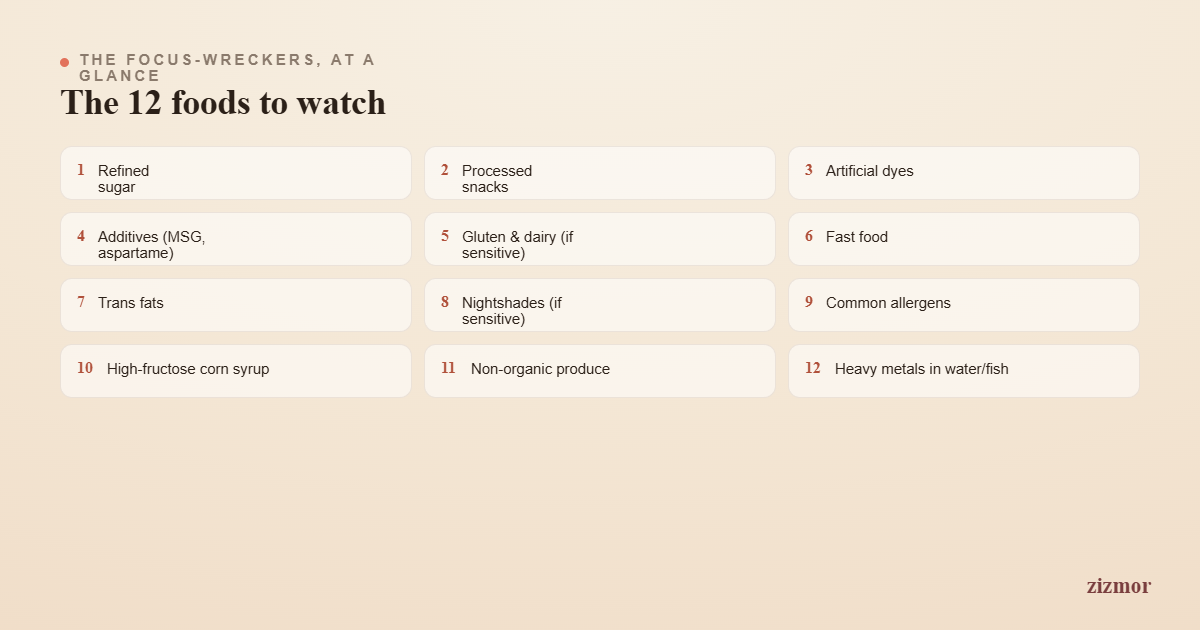
- The 12 Culprits: Foods to Avoid for Better Focus
- 1. Sugar’s Impact on ADHD Concentration and Energy Crashes
- 2. Processed Foods to Avoid with ADHD Brain Fog
- 3. Artificial Food Dyes and ADHD Hyperactivity
- 4. Specific Food Additives That Make ADHD Worse
- 5. Gluten and Dairy Sensitivities ADHD Connections
- 6. Fast Food Effects on ADHD Symptoms
- 7. Trans Fats and ADHD Concentration Problems
- 8. Inflammatory Foods to Avoid for ADHD Brain: Nightshades
- 9. Common Allergens Linked to ADHD Symptoms
- 10. High-Fructose Corn Syrup (HFCS)
- 11. Non-Organic Produce
- 12. Heavy Metals and Water Contaminants
- How Do You Spot ADHD Diet Red Flags for Children's Behavior?
- What Are the Best and Worst Foods for Adult ADHD?
- Taking Action with Foods to Avoid with ADHD for Better Focus
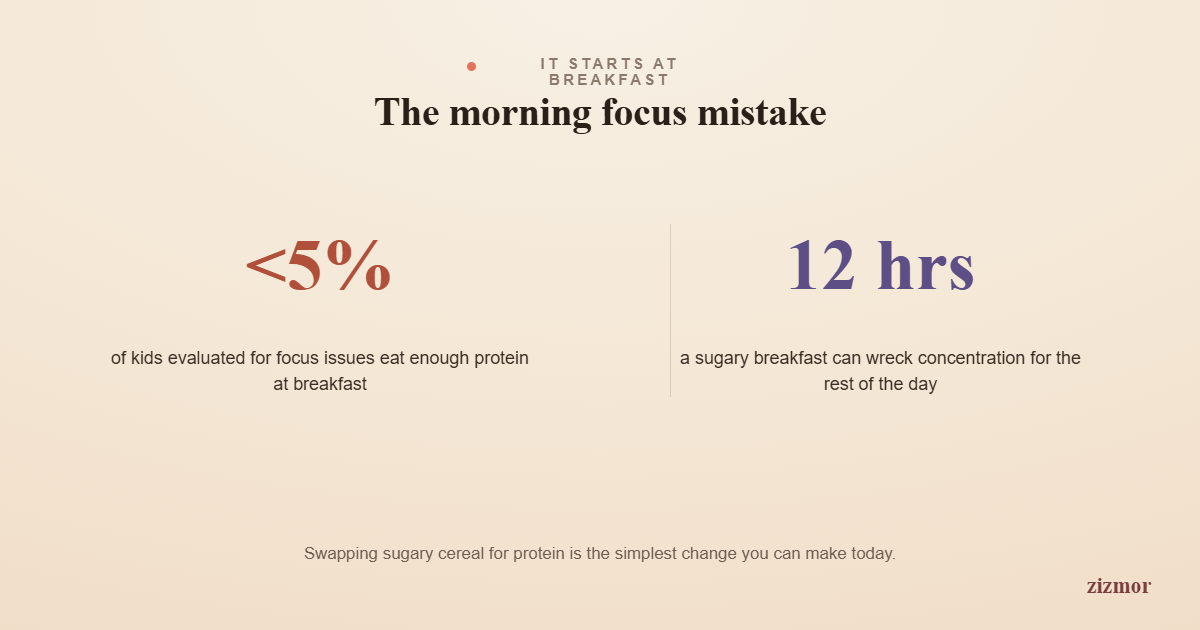
Did you know that 95% of parents and adults are accidentally feeding their brains the exact chemicals that lock focus away? Less than 5% of kids evaluated for focus issues actually eat enough protein at breakfast. That means nearly everyone you know starts their day with a massive brain disadvantage. This breakfast mistake can destroy your concentration for the next twelve hours. You try hard. Your child tries hard. Yet the mind keeps drifting. The clock is ticking on school and work. You can change this today.
We have spent decades studying the human mind. Our team leader, Dr. Michael J. Zizmor, has over 40 years of experience in the mental health field. He started his academic journey studying Psychology at the University of California, Berkeley, where he focused on how the human mind behaves. He earned his Medical Doctorate at the University of Kansas School of Medicine. After medical school, he completed his internship at Boston University-affiliated hospitals and did his psychiatric residency training at St. Elizabeths Hospital in Washington, DC. Over his 40 years of real-world practice, we have seen how simple daily food choices change how you think, focus, and feel. If you want to stop the mental spin, you must know the primary foods to avoid with ADHD for better focus.
What Are the Primary Foods to Avoid with ADHD for Better Focus?

Food is the actual fuel for your brain. If you put dirty fuel in a sports car, the engine sputters. The ADHD brain is like a high-performance sports car. It has sensitive steering. When you feed it blood sugar spikes, inflammation, and synthetic chemicals, the system stalls.
We see this struggle every day in our clinical practice. Parents tell us their kids cannot sit still after breakfast. Adults tell us they crash at 2:00 PM and cannot finish their work tasks. This is not just a lack of willpower. It is a physical reaction to dietary triggers.
Changing what you eat will not cure ADHD on its own. But the right food helps your brain work at its best. It helps your medications work longer and smoother. Let's explore the foods that make focus harder and the simple swaps you can make today.
Why Do Foods That Decrease Focus with ADHD Mess with Your Mind?
Your brain cells talk to each other using chemical messengers called neurotransmitters. These messengers need a clear path to deliver their signals. When you eat foods to avoid with ADHD, you block those paths.
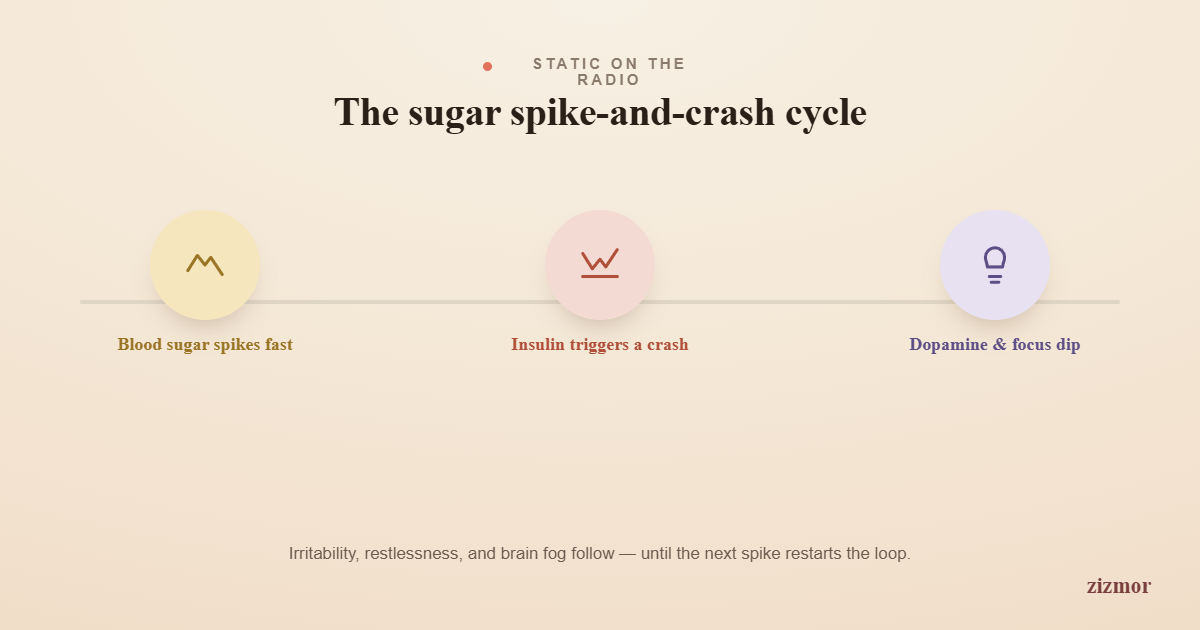
Think of these foods like static on a radio. They scramble the message. Harvard Health studies show that people who eat whole, clean foods enjoy much better emotional health. They have steadier focus.
The wrong foods cause rapid shifts in your body. They create physical friction. When your body is busy fighting inflammation or balancing blood sugar crashes, your brain loses the energy it needs to concentrate.
What Are the Hidden Dietary Triggers for Adult ADHD Focus?
Adults face unique challenges. You do not just bounce off the walls. Instead, your symptoms show up as chronic brain fog, messy desks, and missed deadlines.
The primary dietary triggers for adult ADHD focus are often hidden in quick, convenient meals. You grab a sugary coffee and a pastry on the way to work. You eat a quick fast-food lunch to save time.
These choices lead to immediate blood sugar spikes. Your body releases insulin to fight the sugar, which causes a massive mental crash. A study published in the Journal of Attention Disorders showed that a Western diet full of processed foods and sugar doubles the risk of an ADHD diagnosis. Your food choices are directly tied to your mental clarity.
The 12 Culprits: Foods to Avoid for Better Focus
Here is the breakdown of the twelve foods that disrupt focus, complete with the science behind them and the simple swaps you can make.
1. Sugar’s Impact on ADHD Concentration and Energy Crashes
Refined sugar is one of the biggest enemies of mental clarity. When you consume soda, candy, or boxed sweets, your blood sugar levels skyrocket. You might feel a quick burst of energy.
This energy spike is short-lived. Your body responds by pulling the sugar out of your blood, leading to a severe energy crash. This crash makes you feel irritable, hyperactive, and unable to think clearly.
This cycle is closely tied to sugar's impact on ADHD concentration. High sugar intake can affect your brain's dopamine pathways. Over time, your brain can become less sensitive to dopamine, the very chemical you need to feel motivated and focused. The World Health Organization recommends that adults limit added sugars to less than ten teaspoons per day to protect overall health.
- What to Swap: Cut out sugary sodas and fruit juices. Swap them for fresh berries like strawberries and blueberries. Whole fruits contain natural fibers that slow down sugar absorption, protecting your brain from crashes. You can also use natural sweeteners like stevia or monk fruit in moderation.
2. Processed Foods to Avoid with ADHD Brain Fog
Packaged snacks like potato chips, granola bars, and microwave meals are highly processed. They are packed with simple carbohydrates and refined sodium. They contain very few real nutrients.
Eating these snacks creates processed foods to avoid with ADHD brain fog. Your brain needs vitamins, minerals, and healthy fats to build cell connections. When you fill your body with empty calories, your brain starved for real nutrients.
The lack of nutrients causes cognitive fatigue. You feel like your head is filled with heavy cotton. You struggle to start tasks or remember simple instructions.
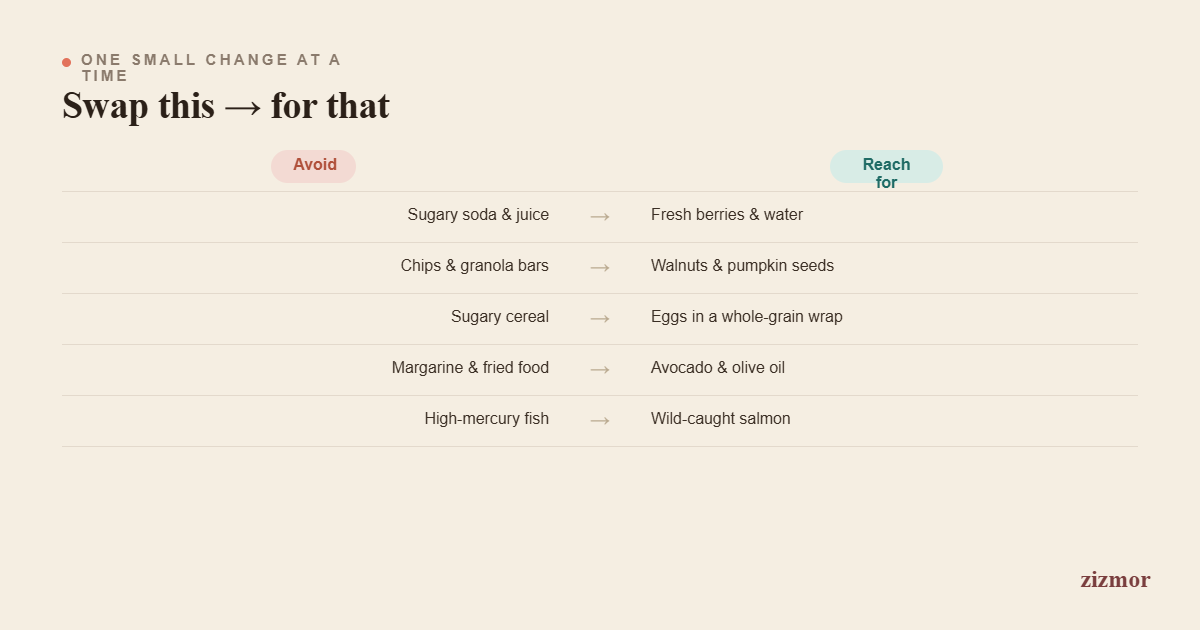
- What to Swap: Ditch the chips and granola bars. Replace them with raw walnuts or pumpkin seeds. These foods are loaded with healthy omega-3 fatty acids and minerals that support brain cell health and cognitive speed.
3. Artificial Food Dyes and ADHD Hyperactivity
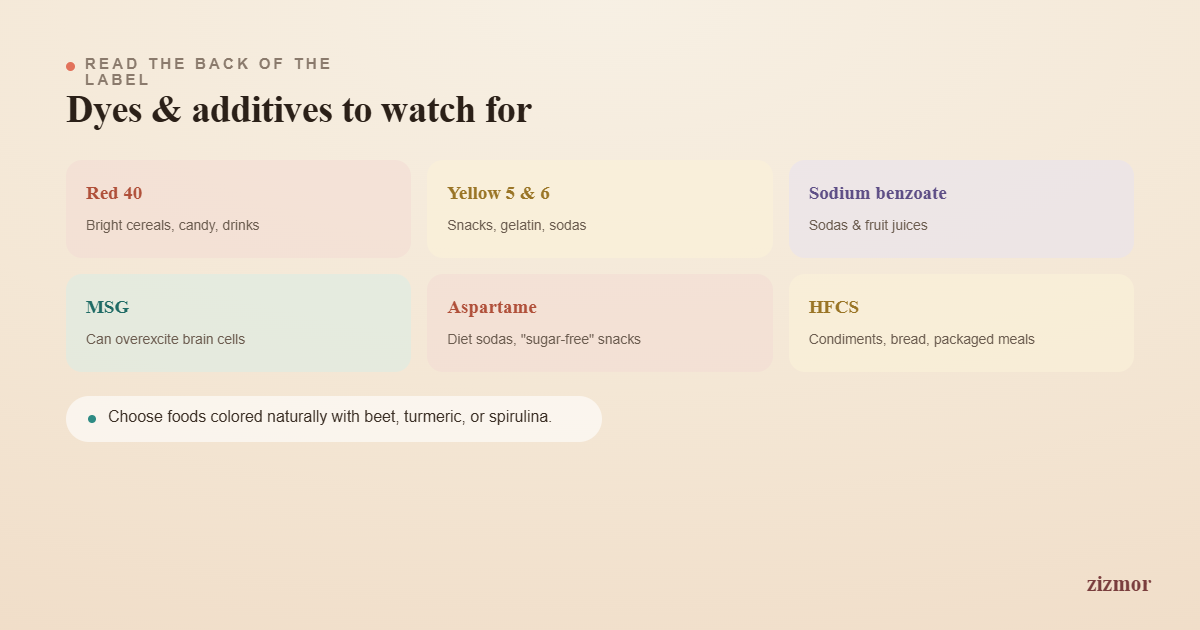
Synthetic food colorings like Red 40, Yellow 5, and Yellow 6 are common in many children's products. You find them in bright cereals, gelatin snacks, and colorful candies.
These chemicals are directly tied to artificial food dyes and ADHD hyperactivity. The FDA has placed warnings on specific artificial colors because they can increase hyperactive behavior in children. Research shows that removing these synthetic dyes from a child's diet can lead to significant improvements in behavior.
These dyes are primary examples of foods that worsen ADHD symptoms in children. They irritate the nervous system, making it incredibly difficult for a child to sit still or pay attention in class.
- What to Swap: Avoid brightly colored packaged foods. Choose products colored naturally with fruit and vegetable extracts, such as beet juice, turmeric, or spirulina.
4. Specific Food Additives That Make ADHD Worse
Preservatives and flavor enhancers are added to packaged foods to extend their shelf life and make them taste stronger. Sodium benzoate, aspartame, and monosodium glutamate (MSG) are common additives.
These are specific food additives that make ADHD worse in your daily life. Sodium benzoate is often used in sodas and fruit juices. Studies have linked this preservative to increased hyperactivity and restlessness.
MSG can overexcite brain cells, leading to physical headaches and mental fatigue. These chemicals disrupt the natural balance of your nervous system.
- What to Swap: Read food labels carefully before buying. Avoid foods with long chemical names on the back. Swap them for fresh, single-ingredient whole foods like fresh vegetables, eggs, and raw meats.
5. Gluten and Dairy Sensitivities ADHD Connections
Gluten is a protein found in wheat, rye, and barley. Casein is a protein found in dairy products like milk, cheese, and yogurt. Many people have subtle sensitivities to these proteins without knowing it.
This issue highlights gluten and dairy sensitivities ADHD interactions. When a sensitive person eats gluten or dairy, it triggers a low-grade immune response in the gut. This response causes mild, systemic inflammation.
Because your gut and brain are directly connected, an irritated gut leads to an irritated brain. This physical reaction often manifests as brain fog, emotional irritability, and low focus.
- What to Swap: If you suspect a sensitivity, talk to a doctor about a structured elimination trial. Swap cow's milk for unsweetened almond milk, coconut milk, or oat milk. Use gluten-free whole grains like brown rice, quinoa, and oatmeal.
6. Fast Food Effects on ADHD Symptoms
Fast food meals are designed to be cheap, fast, and highly appealing. They contain high amounts of trans fats, processed sodium, and chemical stabilizers.
The fast food effects on ADHD symptoms are immediate and destructive. These meals are very high in simple carbohydrates and saturated fats. They contain almost no vitamins or fiber to protect your brain.
Eating fast food regularly increases systemic inflammation. It slows down cellular communication in the brain. This slow communication makes it much harder to plan, make decisions, and control impulses.
- What to Swap: Avoid the drive-thru lane. Prepare quick meals at home using grilled chicken, baked potato wedges with olive oil, and fresh green salads.
7. Trans Fats and ADHD Concentration Problems
Trans fats, or partially hydrogenated oils, are fried food oils, commercial baked goods, and margarine staples. These fats are highly unnatural.
They are directly linked to trans fats and ADHD concentration issues. Your brain is made largely of fat. It uses the fats you eat to build cell membranes.
When you consume trans fats, your brain incorporates these rigid fats into its cell membranes. This rigidity slows down cellular communication, making cognitive tasks feel slow and difficult.
- What to Swap: Avoid fried foods and margarine. Prioritize healthy, monounsaturated fats like avocados and extra virgin olive oil. These fats help keep your brain cell membranes flexible and responsive.
8. Inflammatory Foods to Avoid for ADHD Brain: Nightshades
Nightshade vegetables include white potatoes, tomatoes, eggplants, and bell peppers. These plants contain solanine, a natural chemical that protects the plant from insects.
For some people, solanine is among the inflammatory foods to avoid for ADHD brain health. Sensitive individuals may experience mild digestive discomfort or joint irritation after eating nightshades.
This physical discomfort acts as a constant drain on your mental energy. When your body is dealing with physical irritation, your focus naturally drops. This link describes how nightshade vegetables and ADHD symptoms can occasionally interact in sensitive people.
- What to Swap: Monitor how you feel after eating tomatoes or potatoes. If you notice a focus drop, swap white potatoes for sweet potatoes or yams, and use carrots and broccoli for your vegetable sides.
9. Common Allergens Linked to ADHD Symptoms
Soy, peanuts, corn, and shellfish are common dietary allergens. They can trigger immune responses even if you do not experience a severe allergic reaction.
These common allergens linked to ADHD symptoms cause constant, low-grade inflammation. For example, soy contains high levels of manganese. Some research suggests that very high levels of manganese might be linked to hyperactive behavior in sensitive children.
When your body is constantly reacting to mild allergens, it remains in a stressed state. This stress makes it very difficult to stay calm and focus.
- What to Swap: Swap soy-based products for alternative proteins like poultry or legumes. Use sunflower seed butter or pumpkin seed butter as a safe alternative to peanut butter.
10. High-Fructose Corn Syrup (HFCS)
High-fructose corn syrup is an inexpensive sweetener used in sodas, condiments, breads, and packaged meals. It is highly processed.
HFCS is a major contributor to foods that decrease focus with ADHD. Research indicates that HFCS can lower the energy production within your brain cells.
It triggers a physical "foraging" response. This response can manifest as restlessness, impulsivity, and difficulty sitting still.
- What to Swap: Check condiment labels. Choose ketchup, salad dressings, and breads made without high-fructose corn syrup. Use real maple syrup or fresh whole fruits for sweetness.
11. Non-Organic Produce
Conventional farming often uses pesticides to protect crops. Organophosphates are a common class of pesticides used on fruits and vegetables.
These chemical residues are foods that worsen ADHD symptoms in children. A study published in Pediatrics linked organophosphate pesticide exposure to increased ADHD diagnosis rates and symptom severity.
These chemicals can be toxic to developing nervous systems. They interfere with normal brain development and focus.
- What to Swap: Buy organic versions of the "Dirty Dozen" (the most pesticide-heavy produce, like strawberries, apples, and grapes). If organic is not an option, wash your fruits and vegetables thoroughly under running water before serving.
12. Heavy Metals and Water Contaminants
Unfiltered tap water and certain predatory fish can contain trace levels of heavy metals like lead and methylmercury. These metals are neurotoxins.
These toxins are foods to avoid with ADHD for better focus. Heavy metals accumulate in brain tissue over time.
They damage executive function. This damage impairs working memory, motor control, and long-term attention span.
- What to Swap: Avoid high-mercury fish like king mackerel and swordfish. Choose low-mercury fish like wild-caught salmon, which is packed with brain-boosting omega-3 fatty acids. Use a high-quality water filter for all drinking and cooking water.
How Do You Spot ADHD Diet Red Flags for Children's Behavior?
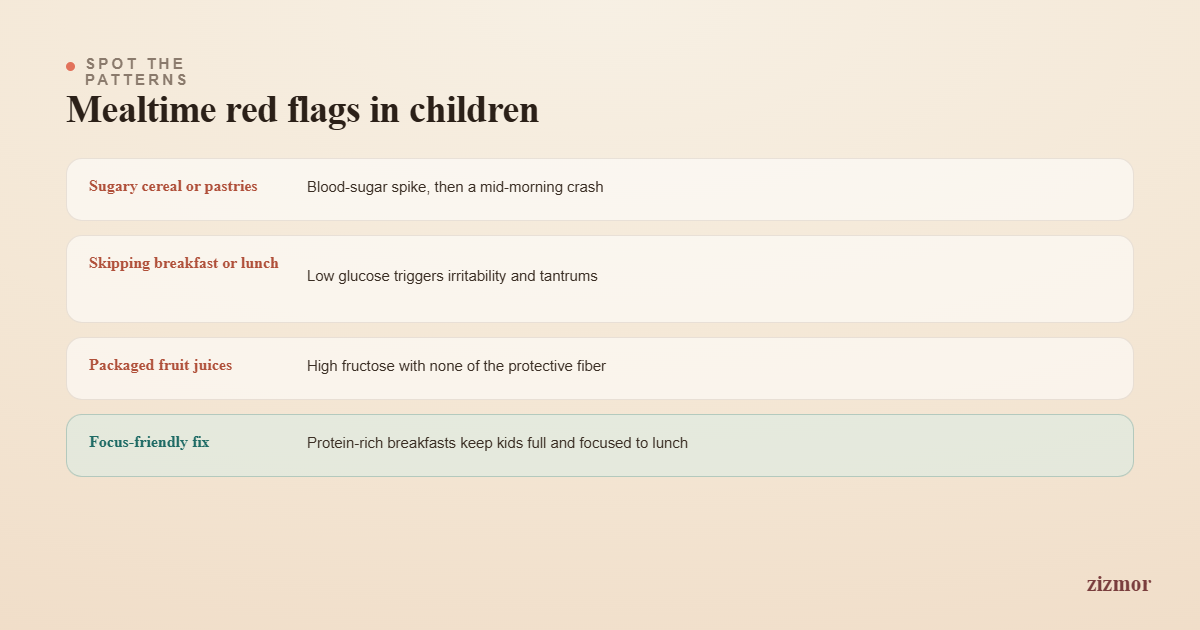
Identifying dietary issues in children requires looking for specific mealtime patterns. Sugary breakfast cereals, skipped meals, and frequent fast-food snacks are major warning signs.
These patterns describe ADHD diet red flags for children's behavior. When a child skips a meal or eats a sugary breakfast, their blood sugar drops rapidly by mid-morning. This drop triggers irritability, temper tantrums, and an inability to focus in school.
Replacing sugary cereals with protein-rich breakfasts can keep children full and focused until lunch. This simple change helps prevent the behavior swings caused by blood sugar crashes.
What Are the Best and Worst Foods for Adult ADHD?
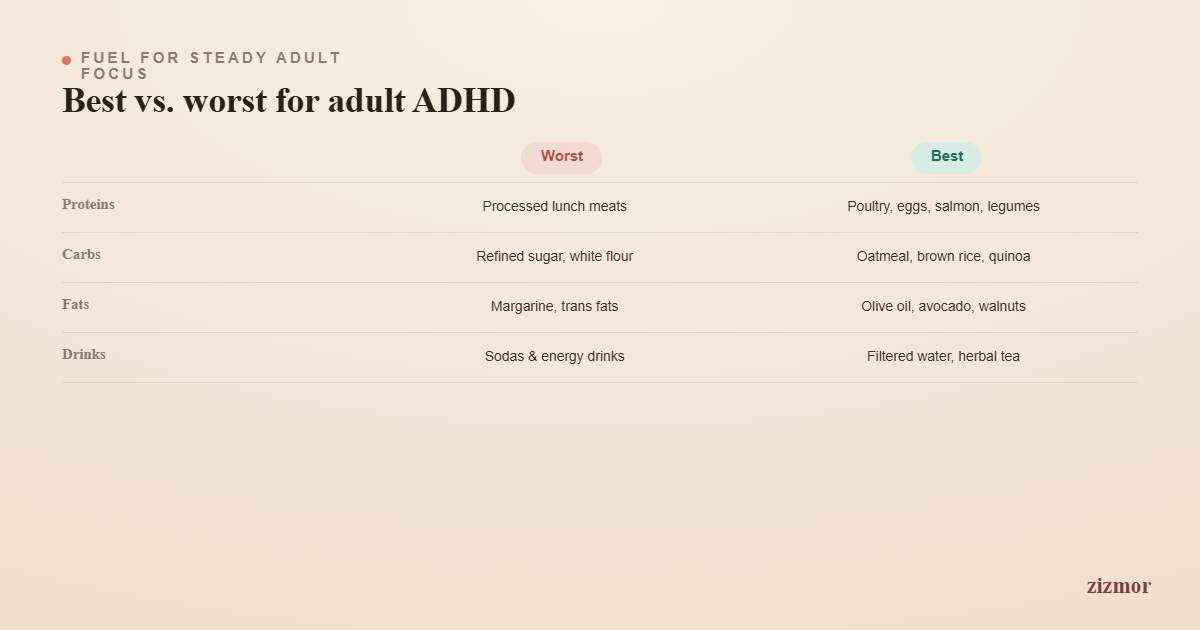
Adult cognitive endurance requires steady energy. To maintain focus throughout the work day, you need to structure your diet around brain-supporting whole foods.
This structure helps you identify the best and worst foods for adult ADHD. Transitioning away from processed foods and toward a Mediterranean-style diet can significantly improve your daily focus.
Avoiding these dietary triggers for adult ADHD focus helps you maintain stable mental energy. You can work with clinical support to slowly transition your diet toward these brain-supporting alternatives.
Taking Action with Foods to Avoid with ADHD for Better Focus
Managing your attention span requires looking at what you put on your plate. By removing synthetic dyes, highly processed sugars, trans fats, and hidden chemical additives, you give your brain a clean slate to focus.
Do not try to change your entire diet overnight. Start with one small change. Swap your morning sugary cereal for eggs. Swap your afternoon potato chips for raw walnuts or pumpkin seeds. These small, consistent steps add up to major improvements in focus.
If you are ready to identify your personal dietary triggers, we are here to help. Our team uses decades of clinical experience to build personalized, evidence-based nutrition plans that support your focus. Contact us today to schedule your consultation and take control of your cognitive health.
FAQs
Should you mix caffeine with ADHD meds?
No, you should not. Mixing them triggers severe jitters, fast heartbeats, and terrible sleep crashes. Your brain gets overstimulated, and your meds stop working smoothly. Dump the energy drinks today and protect your peace. Call us to balance your routine.
Does exercise help children focus on homework?
Yes, absolutely. Running hard for an hour before homework releases natural brain chemicals. It burns off hyper energy so your child can sit still and focus. Stop the daily homework battles. Send your kid outside to play now.
Can vitamin deficiencies make ADHD worse?
Yes, they can. Low iron, zinc, and magnesium starve your brain of the tools it needs to concentrate. This lack of nutrients causes extreme irritability and constant fatigue. Stop guessing about nutrition. Let us test your vitamin levels today.
Does ADHD medication affect your appetite?
Yes, it does. Stimulant medications can completely shut down your hunger cues, leading to weight loss and fatigue. You must pack every bite with dense, healthy fats. Add avocado and nut butter to meals. Call us to help now.
Can probiotics improve your focus and mood?
Yes, they can. Your gut and brain are directly wired together, so a toxic gut scrambles your attention. Probiotics feed good bacteria, clearing the fog and boosting mood. Stop ignoring your gut. Call us to heal your gut today.